TerraBloom Extermination provides residential and commercial pest control service in Columbus, diagnosing structural vulnerabilities and resolving active insect and mammal colonies across Franklin County. Property owners searching for an experienced pest control service near me receive transparent diagnostic evaluations, physical entry-point sealing, and low-impact treatments without locked recurring monthly contracts.
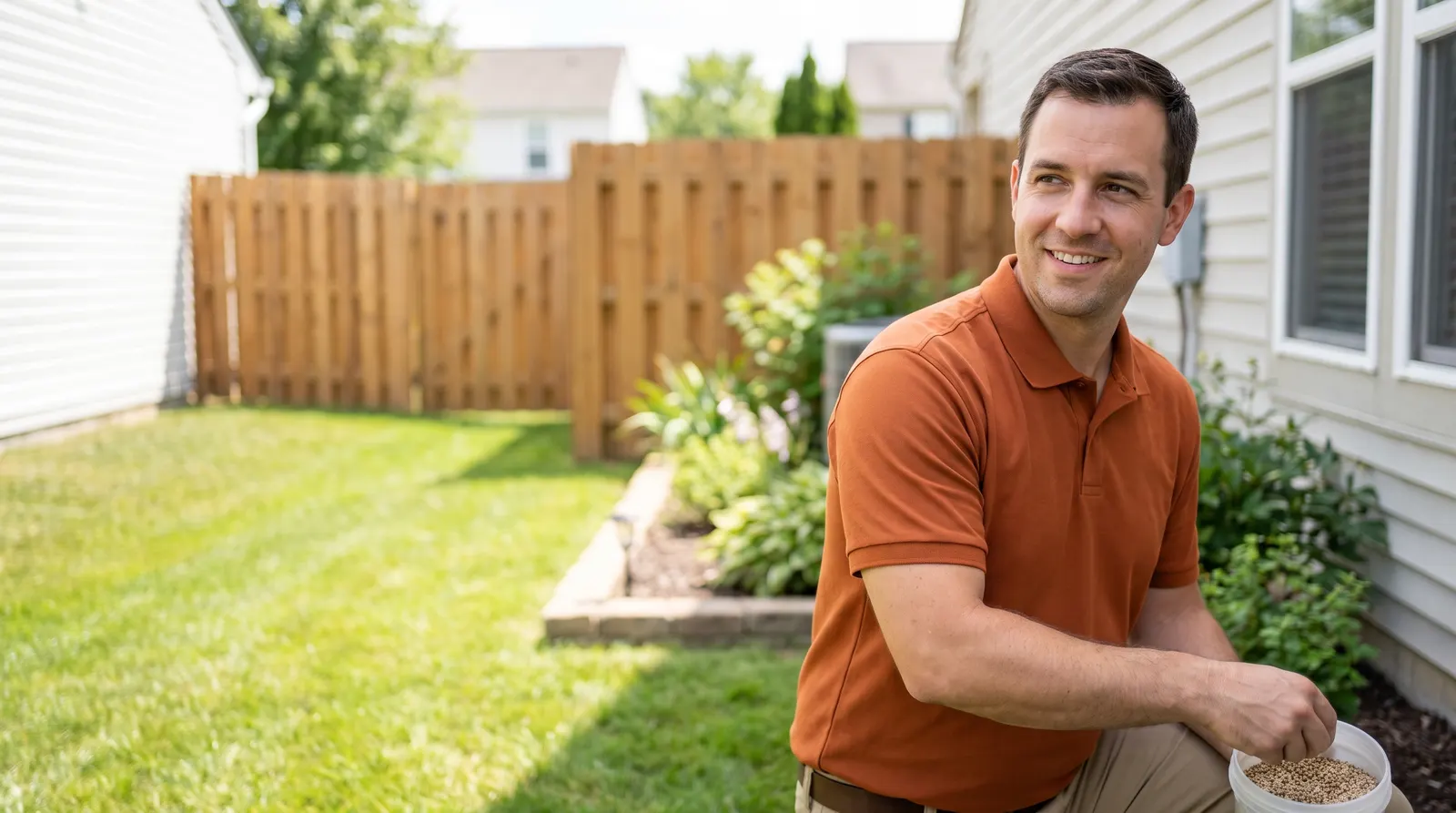
A professional pest control service in Columbus is a specialized ecological management process that inspects, identifies, and removes biological infestations from residential and commercial structures using targeted structural exclusion and reduced-risk botanical compounds.
Every service reflects the same meticulous attention to detail, whether it's a single job or a larger pest control sevice project across Columbus.
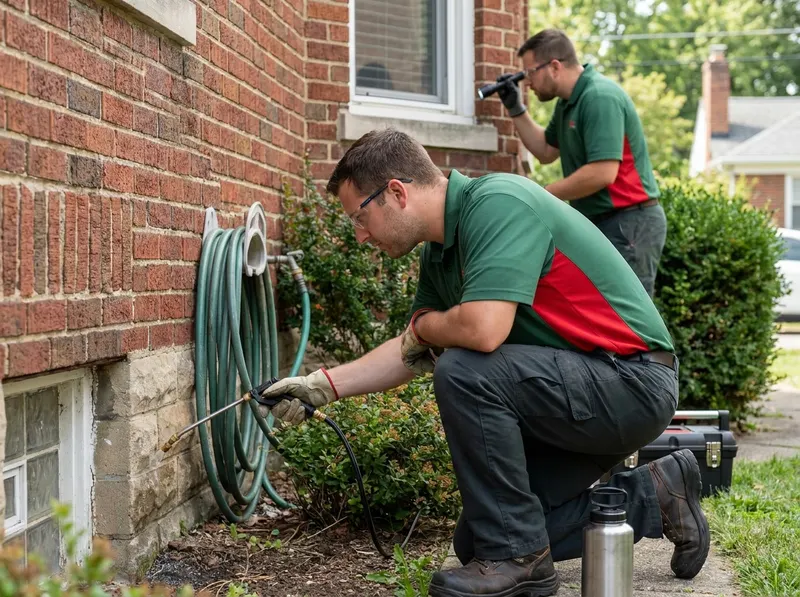
Comprehensive indoor and outdoor perimeter defense focused on identifying entry conduits, eliminating active moisture-seeking insects, and applying botanical barrier formulations along foundation perimeters without contaminating living spaces. The initial service includes an inspection of crawlspaces, sill plates, utility penetrations, and exterior perimeters to identify nesting harborage zones. Technicians employ plant-derived essential oil active ingredients, including rosemary oil, geraniol, and thyme oil, which disrupt insect octopaminergic neuroreceptors without creating indoor respiratory irritants for children, elderly family members, or domestic pets. Exterior band treatments cover a three-foot vertical foundation perimeter and two-foot horizontal soil boundary, suppressing nuisance invasions of pavement ants, field crickets, millipedes, and silverfish before interior colonization occurs. Follow-up seasonal evaluations inspect potential pest bridging created by ornamental shrubs, mulch beds, or shifting grade lines against siding materials.
Get a quote →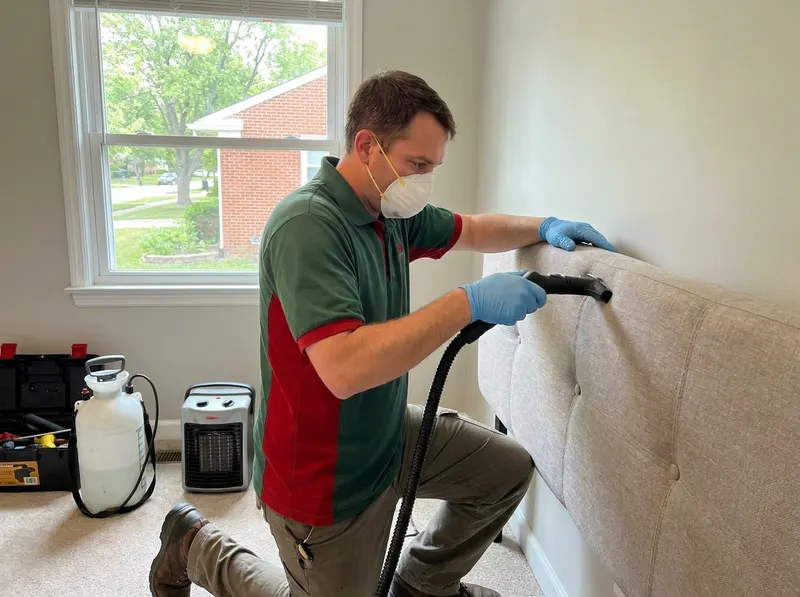
Targeted thermal remediations combined with pharmaceutical-grade desiccant dusts and insect growth regulators to eliminate adult bed bugs, nymphs, and unhatched eggs within mattress seams, baseboards, and interior wall voids. Bed bug interventions utilize industrial forced-air convective heating systems to elevate room temperatures to a lethal range between 120°F and 135°F, maintaining the thermal threshold for at least 4 hours to penetrate dense upholstery, structural wall plates, and deep floorboard recesses. In structures where structural geometry or heat-sensitive belongings restrict convection heating, precision applications of amorphous silica gel dust physically erode the waxy lipid layer of the insect cuticle, triggering irreversible desiccation within 24 to 72 hours. Insect growth regulators like hydroprene are integrated within electrical outlets and interior door moldings to prevent surviving nymphs from molting into sexually mature adults, eliminating pesticide-resistant strains without chemical odors or lingering synthetic vapors.
Get a quote →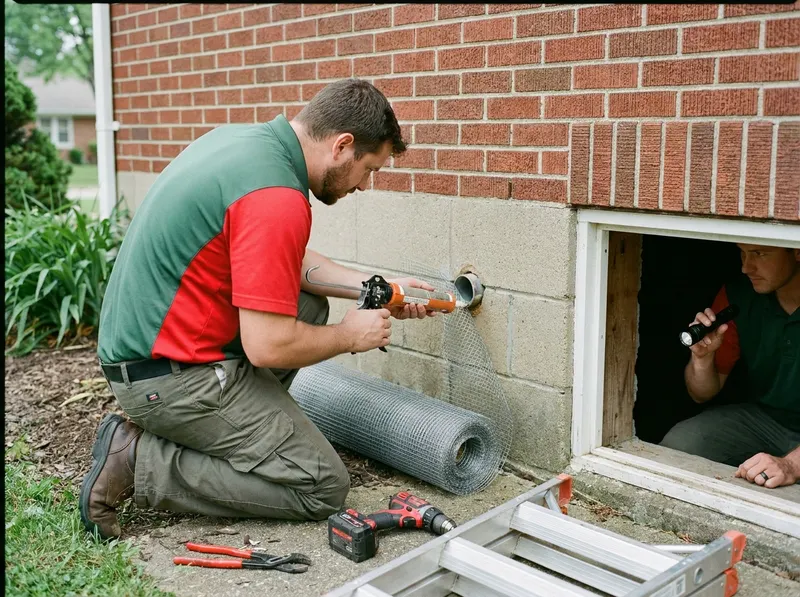
Mechanical trapping, sanitation, and complete exterior architectural sealing using galvanized steel mesh and expanding structural foam to permanently bar house mice, deer mice, and Norway rats from entering crawlspaces and attics. The process begins with an in-depth survey of building perimeters, utility conduit entrances, HVAC chases, and garage door thresholds to uncover rub marks, gnaw tracks, and micro-openings as narrow as 0.25 inches. Technicians deploy zero-rodenticide mechanical capture stations within subfloors, attics, and suspended ceiling grids, avoiding secondary poisoning risks to neighborhood wildlife or indoor pets. Once interior populations are trapped and cleared, exterior points of vulnerability are structurally reinforced with 19-gauge galvanized wire mesh, copper wire packing, and metal-reinforced polyurethane seals that resist rodent gnawing. Sanitization treatments utilize biocidal enzyme solutions to dissolve pheromone trails, urine residues, and droppings, restoring hygienic conditions to attic insulation and food storage areas.
Get a quote →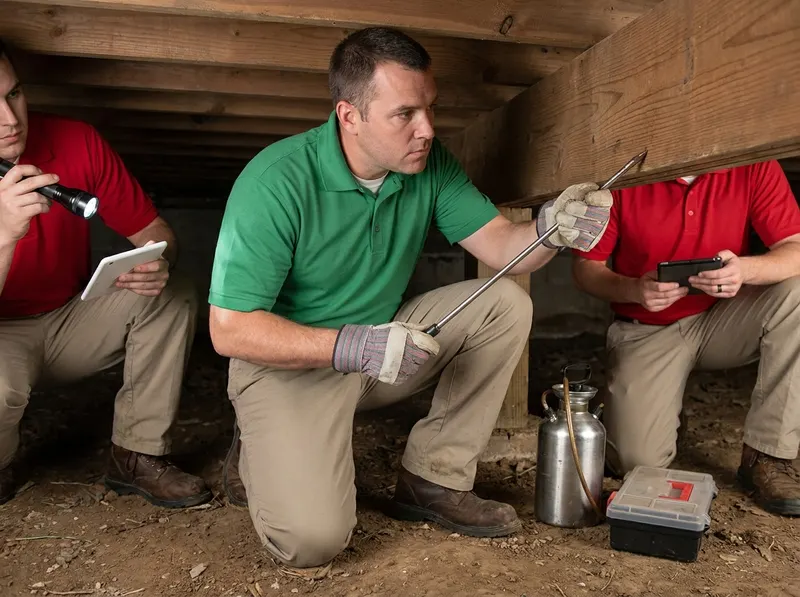
Thorough structural assessments targeting Eastern subterranean termites, featuring perimeter trenching treatments, localized botanical foaming within structural timbers, and exterior bait monitoring installation. Columbus properties with limestone foundations, crawlspace dirt floors, or ground-level slab constructions face significant structural risks from subterranean workers migrating from soil moisture zones. Inspections include sounding load-bearing sill plates, moisture testing structural rim joists, and identifying exploratory mud tubes running along concrete block mortar lines. Treatment strategies focus on establishing continuous, non-repellent exterior perimeter barriers or installing low-profile inground bait stations containing chitin-synthesis inhibitors. For active gallery infestations discovered within interior wall frames, pressurized borate foaming penetrates deeply into structural wood fibers, rendering cellulose completely inedible to wood-destroying insects while creating a protective mineral barrier that lasts indefinitely in dry conditions.
Get a quote →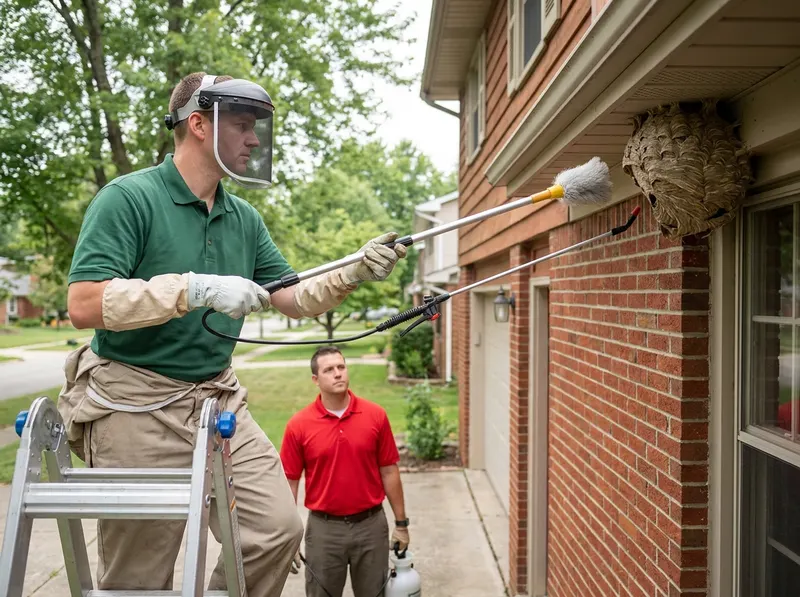
Direct mechanical removal and targeted void treatments for bald-faced hornets, paper wasps, and yellowjacket subterranean nests located near high-traffic entryways, overhangs, and historic masonry crevices. Stinging insects present acute health hazards when colonies develop inside roof soffits, hollow porch columns, exterior wall cavities, or ground burrows in lawn turf. Remediation begins with late-evening or early-morning thermal imaging to pinpoint the exact perimeter of the underground or wall-enclosed nest. High-pressure dusting units deliver botanical pyrethrum aerosols or pulverized diatomaceous mineral powders directly into the nest entrance, neutralizing defensive guard insects instantly while saturating internal comb structures. Technicians physically remove exposed paper hives, scrape exterior mounting stalks, and treat structural attachment points with botanical repellent concentrates to stop reproductive queens from rebuilding colonies in the same architectural locations.
Get a quote →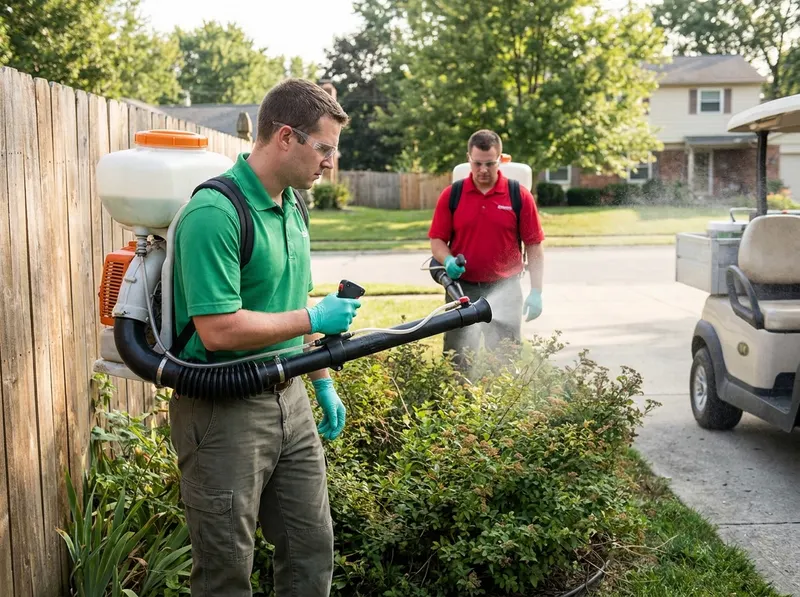
Source-reduction inspections targeting standing ground moisture combined with organic barrier misting applied directly to shaded foliage resting areas to collapse adult populations and disrupt mosquito breeding cycles. Standing water deposits in catch basins, bird baths, corrugated downspout extensions, and clogged gutters serve as reproductive nurseries for Culex and Aedes mosquito species across central Ohio. Our technicians inspect properties to eliminate hidden water catches and apply biological larvicides containing Bacillus thuringiensis israelensis (BTI), a naturally occurring soil bacterium that targets mosquito larvae without harming fish, birds, honeybees, or aquatic vegetation. Ultra-low-volume (ULV) misting equipment then coats the undersides of dense ornamental foliage, broadleaf shrubs, and shaded deck perimeters with micro-encapsulated cedarwood and garlic oil extracts, repelling incoming adult mosquitoes and maintaining outdoor recreation spaces throughout summer humidity spikes.
Get a quote →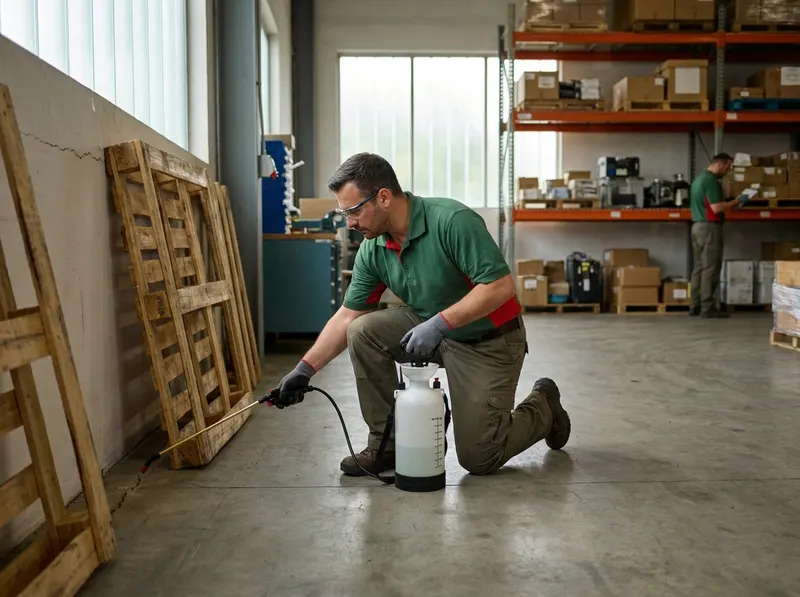
Audit-compliant pest management tailored to industrial facilities, logistics warehouses, and distribution centers, adhering to strict commercial sanitation standards and non-toxic perimeter defense mandates. Commercial facilities face operational disruptions and regulatory violations from stored-product pests like Indian meal moths, merchant grain beetles, and German cockroaches. We design site-specific Integrated Pest Management blueprints incorporating barcode-monitored electronic trapping grids, non-chemical pheromone attraction traps, and clean-air mechanical exclusion barriers around loading dock bay doors. Interior warehousing areas utilize targeted micro-dosed bait gels and non-toxic desiccant dustings inside electrical raceways and mechanical utility rooms, safeguarding sensitive electronic machinery and stored dry goods. Detailed service documentation, trend analysis reports, and floor plan mapping support third-party facility audits, maintaining full compliance with health codes and corporate environmental health mandates.
Get a quote →Flexible, non-contract programmatic defense for multi-family complexes, rental portfolios, and historic brownstones, ensuring prompt unit turnarounds, targeted common-area treatments, and transparent tenant reporting. Tenant turnover and multi-unit shared wall structures present unique cross-contamination risks for German cockroaches, bed bugs, and pantry beetles. Our property management interventions prioritize discreet arrivals using unbranded service vehicles, protecting community reputation while resolving tenant complaints quickly. Every unit remediation involves crack-and-crevice baiting using targeted gel matrices, structural plumbing gap sealing with metal mesh, and baseboard insect growth regulator applications that prevent pest spread into neighboring apartments. Property managers receive digital inspection summaries outlining structural sanitation vulnerabilities, water line leaks, and preventative maintenance recommendations, streamlining unit turns without forcing property owners into expensive, perpetual monthly master contracts.
Get a quote →You get a firm, itemized quote for your pest control sevice before any work begins, no surprises, no pressure.
Careful prep, tidy work, and a full cleanup when we are done. We treat your home and belongings like our own.
The same trusted, background-checked team from the first call to the final check.
Selecting appropriate intervention protocols depends directly on pest biology, structural construction type, and immediate risk levels. If an infestation involves localized wood decay or visible foundation mud tubes along basement floor joists, subterranean termite treatments utilizing targeted perimeter liquid termiticides or slow-acting chitin-synthesis inhibitors are necessary to intercept foraging colonies before structural framing fails. If indoor drywall noises occur alongside fecal pellets in pantries, choose multi-stage rodent exclusion rather than broadcast interior rodenticides; physical exclusion seals structural openings with copper mesh and heavy-gauge hardware cloth, eliminating the risk of rodents expiring inaccessible within wall voids.
If stinging insects nest inside soffits or historic brick masonry, direct botanical aerosol void injection halts colony growth without staining exterior facades, whereas yard-wide perimeter misting remains limited to high-density vegetative zones for seasonal mosquitoes. The operational trade-off centers on intervention depth versus immediate disruption: specialized physical exclusion and thermal remediation require higher initial labor and preparation times, whereas localized botanical perimeter applications provide rapid exterior barrier establishment with zero indoor occupant displacement. Property owners weighing long-term structural defense against acute biological knockdown benefit from an Integrated Pest Management framework that pairs mechanical sealing with target-specific biological insect growth regulators, avoiding unnecessary chemical exposure across living areas.
Every project gets a firm, written price after an on-site visit. Ranges below for orientation.
Tell us about your pest control sevice job and we'll send a clear, written quote, usually the same day. Or just call and talk to a real Columbus pro.
(380) 255-6029
Franklin County's humid continental climate, expansive clay-heavy soils, and network of river corridors, notably the Olentangy River, Scioto River, and Alum Creek, create severe microclimates that drive pest migrations into residential foundations. Central Ohio experiences dramatic seasonal swings, ranging from sub-freezing winter lows to humid summer highs exceeding 90°F, forcing subterranean termites, Norway rats, and field rodents into constant search for climate-controlled indoor shelter. In historic urban core neighborhoods such as German Village, Victorian Village, and Olde Towne East, late 19th-century architecture features porous limestone foundations, soft lime mortar joints, hand-hewn structural timber floor joists, and fieldstone basements that present effortless burrowing paths for subterranean wood-destroying pests and rodents. Dense urban setbacks in the Short North Arts District and Grandview Heights further facilitate rapid cross-property movement for German cockroaches and mice across shared utility lines and zero-lot-line wall assemblies. Meanwhile, sprawling, tree-dense suburban residential landscapes in Clintonville, Bexley, Upper Arlington, and Worthington Hills feature mature oak, maple, and river birch canopies that directly overhang roof eaves and chimney flashings. These vegetative bridges provide carpenter ants, deer mice, and raccoons unobstructed highway corridors into attic soffits, dormers, and unsealed gable vents. Soil profiles across Franklin County are composed predominantly of dense glacial till and illite-chlorite clay, which retains heavy surface water during spring storms. This water-logged soil increases hydraulic pressure against residential basement foundations, driving subterranean termites upward through hairline slab shrinkage cracks as narrow as 0.03 inches. In low-lying, historic flood-plain sections of Franklinton and southern Columbus near Greenlawn Avenue, sustained river moisture elevates summer mosquito hatchings and subterranean rodent activity along structural drainage paths. TerraBloom Extermination specifically designs its biological eradication strategies around these local construction typologies and hydrological conditions, applying custom architectural hardware exclusion, targeted sub-slab termiticide defense, and botanical moisture-resistant perimeter barriers suited to Franklin County properties.
 TerraBloom Extermination