TerraBloom ExterminationTerraBloom Extermination

Bed Bug Extermination Columbus

Bed bug extermination in Columbus addresses active infestations of Cimex lectularius , insects measuring approximately 5 to 7 millimeters in length that nest within 8 feet of sleeping quarters. Urban multi-unit…
Get My Estimate →(380) 255-6029
Bed Bug Extermination in Columbus, OH
Quick answer
  • What is included: Visual and tool-assisted acoustic diagnostics, targeted heat treatment protocols, botanical desiccant application, and preventative mattress encasements.
  • Service speed: On-site diagnostic evaluations deployed within 24 to 48 hours across Columbus neighborhoods.
  • Ballpark pricing: Targeted room treatments start at $250, with whole-home thermal eradications ranging between $850 and $2,400 depending on square footage and structural density.
  • Targeted materials: Elimination of active nymph and adult bed bug colonies, egg clusters hidden in floorboard seams, and resting harborages inside wall cavities.
  • Contact method: Diagnostics are coordinated through TerraBloom Extermination by calling (380) 255-6029.

Bed bug extermination in Columbus addresses active infestations of Cimex lectularius, insects measuring approximately 5 to 7 millimeters in length that nest within 8 feet of sleeping quarters. Urban multi-unit structures in the Short North Arts District and historic brick residences in German Village present unique architectural harborages, such as lath-and-plaster wall voids, subfloor perimeter gaps, and decorative baseboard trim. Managing an infestation requires precise thermal convection paired with non-toxic chemical barriers rather than indiscriminate chemical aerosol spraying. The eradication method follows principles established by the United States Environmental Protection Agency integrated pest management guidelines, ensuring indoor air quality remains protected for companion animals and children.

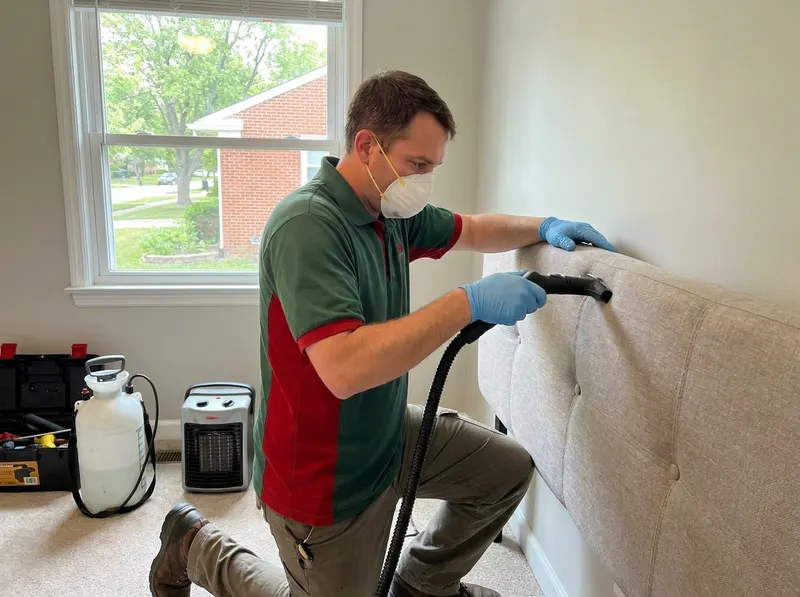
Structural diagnostics identify harborage zones using high-output inspection optics and thermal sensors. In Victorian Village and Clintonville homes, settling foundations frequently create hairline shifts around window casings and electrical outlet boxes where early-stage instars aggregate. According to research from the University of Kentucky Department of Entomology, thermal exposure reaching a sustained core temperature of 122°F (50°C) denatures insect proteins, eliminating all life stages, including desiccation-resistant eggs, within minutes. Heat distribution equipment circulating airflow up to 135°F penetrates deeply into upholstered headboards, structural sill plates, and hardwood joints without damaging personal property.

Following thermal knockdown, technicians place mechanical barriers and botanical formulations along migration avenues. The protocol integrates natural amorphous silica dust, registered through the California Department of Pesticide Regulation for pest management, to physically erode the insect's protective waxy epicuticle rather than relying on neurotoxic synthetic pyrethroids. Properties situated near dense student housing around the Ohio State University Campus or residential areas in Grandview Heights, Upper Arlington, and Bexley benefit from this structural barrier method, preventing cross-unit migration through shared plumbing raceways. Regulatory oversight for pesticide safety in residential spaces falls under the Ohio Department of Agriculture Pesticide Regulation standards, ensuring every localized compound meets strict environmental criteria.

Execution occurs through a systematic, multi-stage remediation workflow outlined in the sequential process below:

  1. Step 1 involves an initial diagnostic assessment utilizing LED inspection lamps to catalog fecal spotting, shed exuviae, and live specimens across bedroom perimeters.
  2. Step 2 requires structural preparation where textiles are sealed in heavy-duty polyethylene bags according to laundering standards defined by the Centers for Disease Control and Prevention.
  3. Step 3 deploys industrial-grade electric or indirect fired heat trailers, elevating ambient indoor space temperatures to lethal thresholds between 120°F and 135°F.
  4. Step 4 monitors internal wall temperatures with non-contact infrared thermometers verified by National Institute of Standards and Technology calibration baselines to prevent thermal bypass pockets.
  5. Step 5 seals vulnerable perimeter voids using elastomeric caulking and installs laboratory-certified mattress encasements meeting Entomological Society of America containment parameters.

Single-room spot interventions suit minor, localized introductions caught within 7 to 14 days of travel. Conversely, multi-story residences in Olde Towne East, Franklinton, or Worthington Hills exhibiting widespread activity require systemic thermal envelope management. The trade-off centers on upfront logistics versus treatment permanence: localized spot dusting reduces initial setup steps but carries a higher risk of colony dispersal, whereas structural heat treatment demands thorough room preparation but achieves complete single-day eradication across all life cycles without recurring monthly service contracts. Waste materials from heavily soiled articles are managed following directives from the Franklin County Board of Health and municipal transfer requirements under the Solid Waste Authority of Central Ohio.

How much does Bed Bug Extermination cost in Columbus?

Single-Room Targeted Botanical & Steam Application$250 - $450
Two-Bedroom Flat Thermal Knockdown & Perimeter Dusting$850 - $1,350
Full-Home Historic Residence Thermal Eradication (Up to 2,500 sq ft)$1,400 - $2,400
Preventative Structural Sealing & Certified Mattress Encasement Package$275 - $600

Every job gets a firm, written price after an on-site visit.

Common questions

What is the minimum cost for bed bug extermination in Columbus?
The minimum baseline charge for any localized bed bug diagnostic and treatment intervention in Columbus is $250. This covers the diagnostic verification and direct botanical spot treatment of an isolated harborage zone, with exact pricing confirmed on-site prior to service commencement.
How does structural heat treatment eradicate bed bugs in Columbus homes?
Structural heat treatment introduces circulating dry air heated between 120°F and 135°F using industrial convection units. This thermal threshold penetrates mattresses, baseboards, and interior wall voids to dehydrate adult insects, nymphs, and eggs in a single treatment cycle.
Are the eradication treatments safe for pets and children in Columbus properties?
Thermal heat interventions use zero synthetic pesticides, allowing occupants and pets to return as soon as ambient interior temperatures return to normal. Where desiccant dusts are applied, formulations rely on amorphous silica, an inert mineral compound that mechanically abrades insect cuticles without dispersing airborne neurotoxins into household ductwork.
Does bed bug extermination in Columbus require signing an ongoing monthly contract?
TerraBloom Extermination performs bed bug eradication without mandatory recurring subscription contracts. Treatments focus on complete biological elimination in one to two targeted visits supported by structural exclusion methods.
How should homeowners prepare historic Columbus residences before thermal bed bug treatment?
Preparation involves removing heat-sensitive items including wax candles, pressurized aerosol containers, delicate oil paintings, and prescription medications. Linens and clothing should be laundered at 120°F or higher, while furniture is pulled approximately 2 feet away from perimeter walls to facilitate uniform thermal convection.

Get started today

Tell us about your bed bug extermination job in Columbus and we'll send a clear, written quote, usually the same day.

Get your PEST CONTROL SEVICE quote, Columbus

We only use your ZIP to check availability, no spam.