Columbus properties frequently encounter intense ant pressure along foundation boundaries, particularly during spring moisture surges and summer drought intervals. Soil compositions common to Franklin County, ranging…
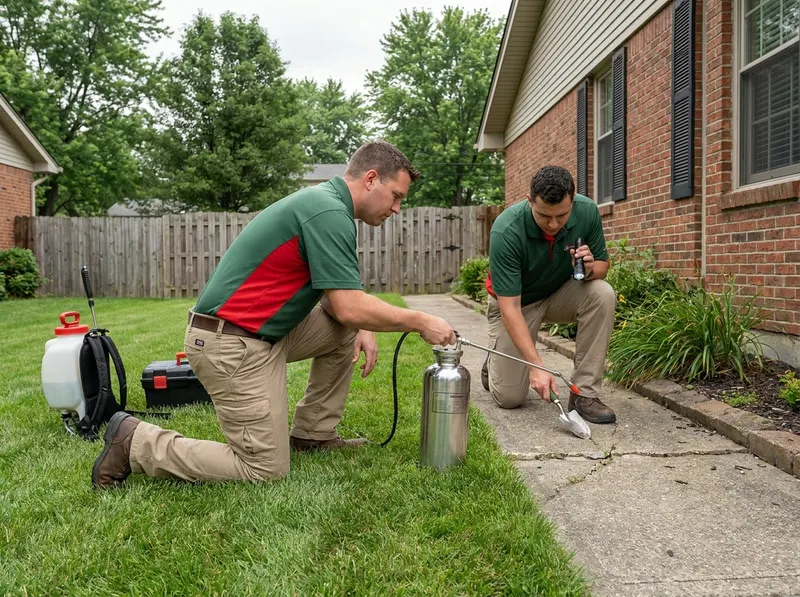
Columbus properties frequently encounter intense ant pressure along foundation boundaries, particularly during spring moisture surges and summer drought intervals. Soil compositions common to Franklin County, ranging from dense glacial clay to silty riverbed loams near the Scioto Mile Promenade, force subterranean colonies of odorous house ants (*Tapinoma sessile*) and pavement ants (*Tetramorium immigrans*) toward residential perimeters. In older residential areas like German Village, Victorian Village, and Clintonville, historical stone rubble foundations, brick pathways, and tongue-and-groove flooring offer open structural pathways directly into pantries. Meanwhile, newer or renovated structures in Grandview Heights, Bexley, and Upper Arlington regularly encounter carpenter ant scouts (*Camponotus pennsylvanicus*) foraging from decaying tree branches or moist moisture-retaining crawl spaces near Goodale Park and Franklin Park Conservatory and Botanical Gardens. Addressing an active foraging trail requires suppressing the colony core rather than spraying superficial consumer aerosols, which frequently cause reproductive budding and fracture a single colony into multiple decentralized nests.
Effective colony eradication applies a systematic structural strategy outlined across numbered interventions rather than generic chemical saturation:
The primary trade-off between slow-acting transfer baiting and immediate topical contact sprays is eradication duration versus systemic recurrence prevention. Contact pyrethroid sprays immediately paralyze visible foraging workers within 15 minutes, but leave the subterranean queen intact; this induces immediate chemical distress, triggering satellite colony formation throughout adjacent interior wall cavities. In contrast, bait matrix protocols require 7 to 14 days for complete colony collapse, but eliminate the brood and egg-laying reproductive females entirely without circulating airborne aerosols through indoor air filters. Homeowners managing active infestations choose between spot exterior applications or full perimeter barriers depending on whether nests originate inside damp subfloors or outside beneath pine bark mulch.
TerraBloom Extermination performs exterior barrier applications and interior bait placements using discreet service vehicles to protect residential privacy throughout urban neighborhoods like the Short North Arts District, Franklinton, and Olde Towne East, as well as suburban tracts in Worthington Hills. Protocols adhere to environmental safety benchmarks established by the National Pesticide Information Center, ensuring interior air quality remains clean for domestic pets and small children. External foundation treatments strictly avoid drift onto neighborhood waterways, aligning with urban watershed protection practices defined by the City of Columbus Department of Public Utilities. All treatments reflect IPM principles supported by the Ohio State University Department of Entomology, balancing thorough pest eradication with pollinator safety guidelines from the Xerces Society for Invertebrate Conservation and public health housing hygiene rules from the Franklin County Public Health agency. Work scopes are verified directly on-site prior to treatment, without mandatory recurring monthly contracts or automated subscription billing. Homeowners can reach TerraBloom Extermination by calling (380) 255-6029 to arrange an on-site diagnostic inspection.
Every job gets a firm, written price after an on-site visit.
Tell us about your ant colony elimination and perimeter shielding job in Columbus and we'll send a clear, written quote, usually the same day.
 TerraBloom Extermination